Emptying Intervention
29 July 2026
1. From Concept to Experience
Following my exploration of Bigu, emptiness and embodied wellbeing, I began translating these philosophical ideas into a physical experience. Rather than explaining the concept of emptiness through words, I wanted participants to experience it through sensory interaction, material transformation and a moment of pause.
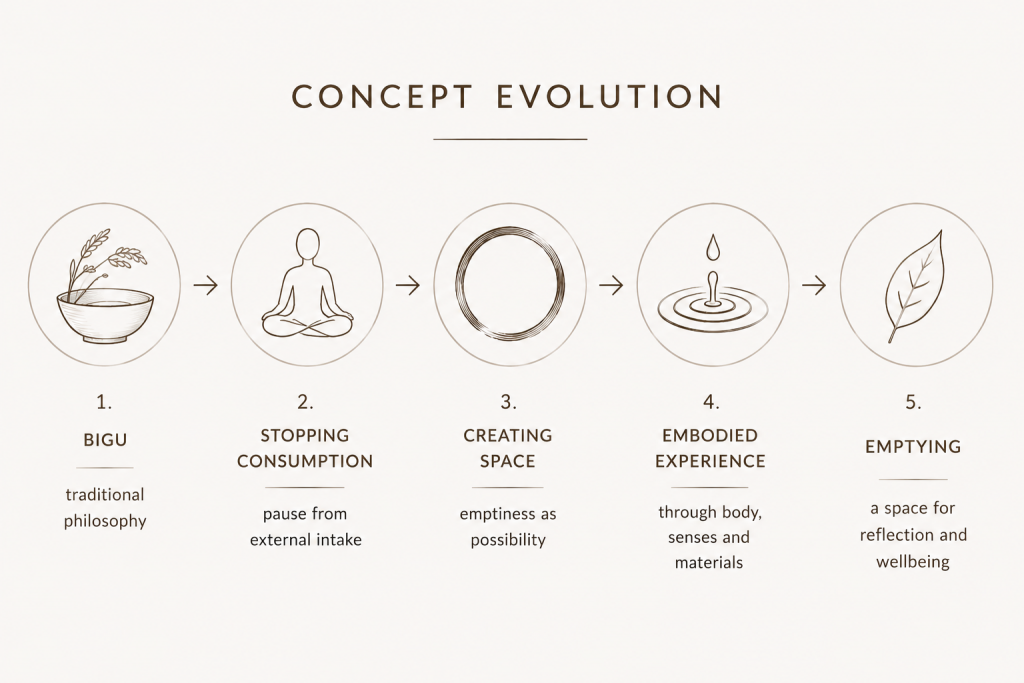
2. Final Research Question
How can the philosophy of Bigu be translated into an embodied experience of emptiness that creates space for reflection and wellbeing in contemporary society?
The intervention explores whether a temporary pause from everyday consumption can create an opportunity for self-reflection.
3. Intervention Overview
Creating a Space for Pause
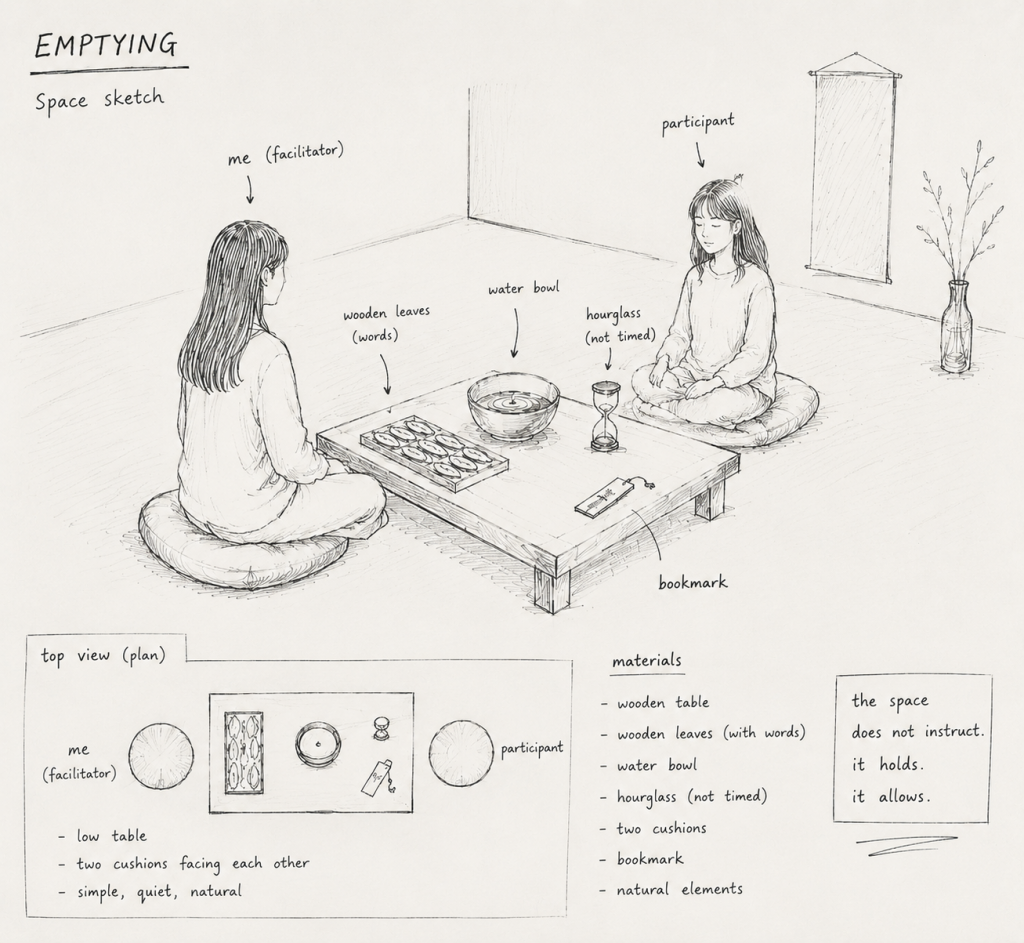
Also, I see myself as part of the intervention, not just an observer, because I will be guiding the participant through the experience. My role is more like a facilitator — creating the atmosphere and supporting their reflection, rather than telling them what they should feel.
The intervention takes place in a quiet, intimate environment inspired by tea culture and traditional Chinese aesthetics. Instead of creating a performance or guided meditation, I designed a one-to-one reflective experience between myself and the participant.
- Two cushions
- I was face-to-face with the participants.
- Water bowl
- wood leaf
- Hourglass
- Wooden bookmark
4. Design and the Intervention Journey
My Design
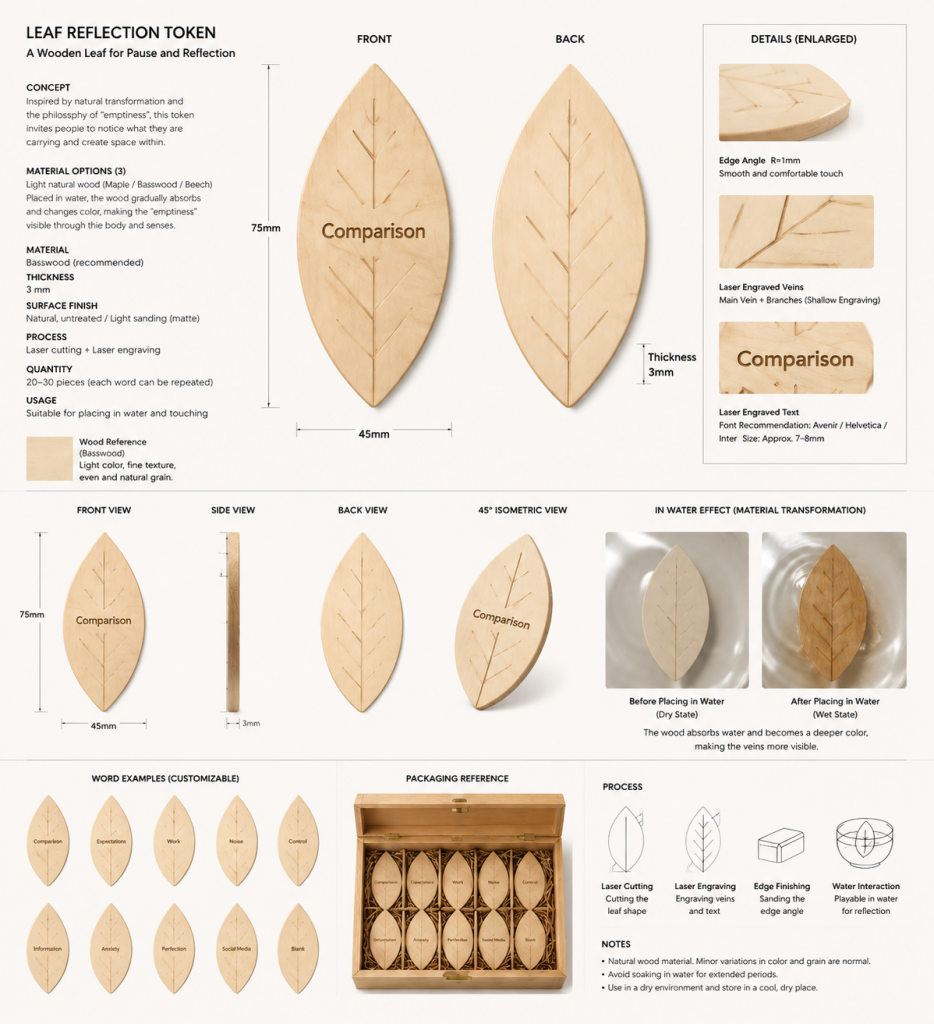
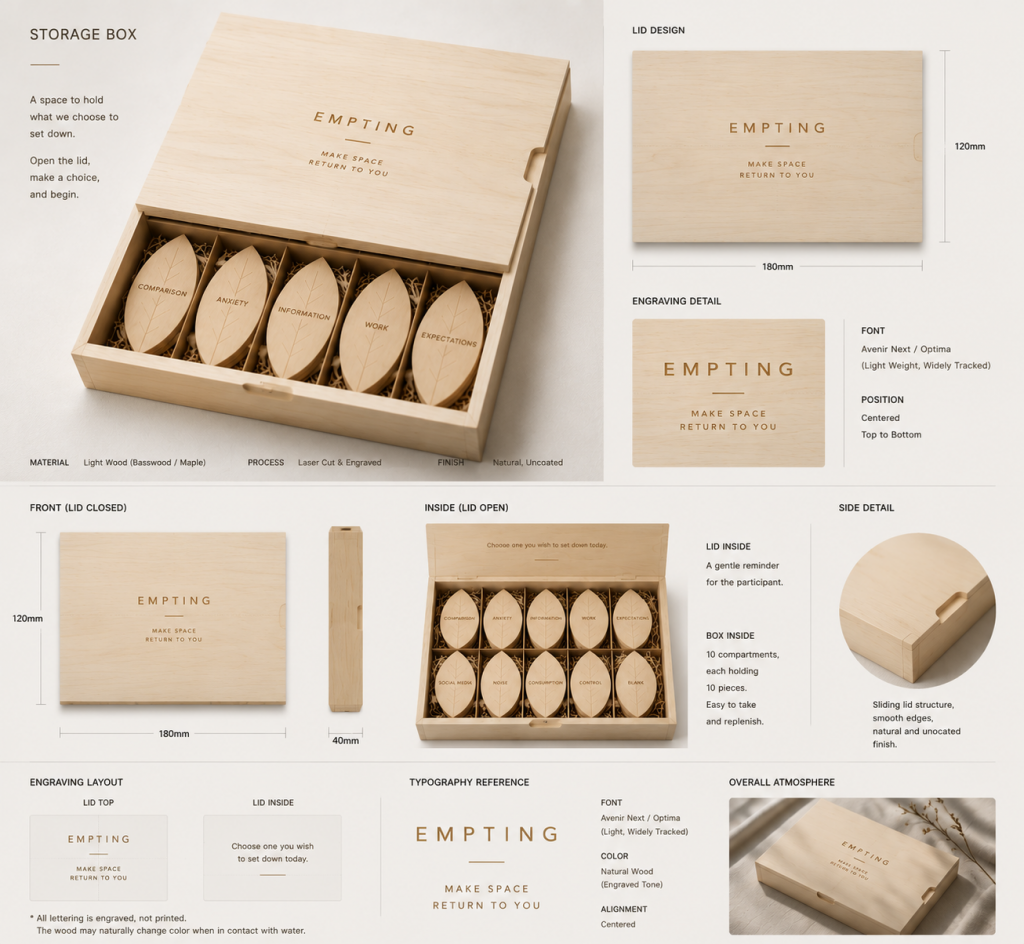
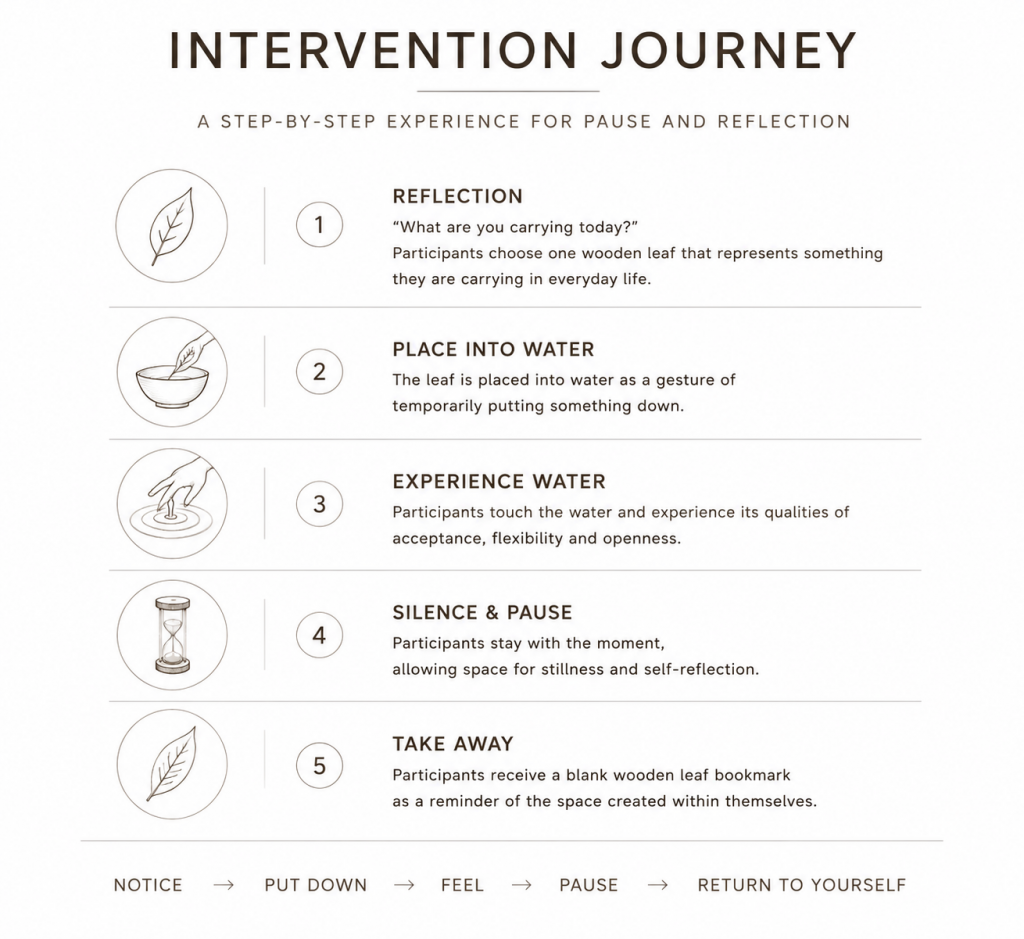
Step 1 — Reflection: “What are you carrying today?”
Participants begin by reflecting on the question: “What are you carrying today?”
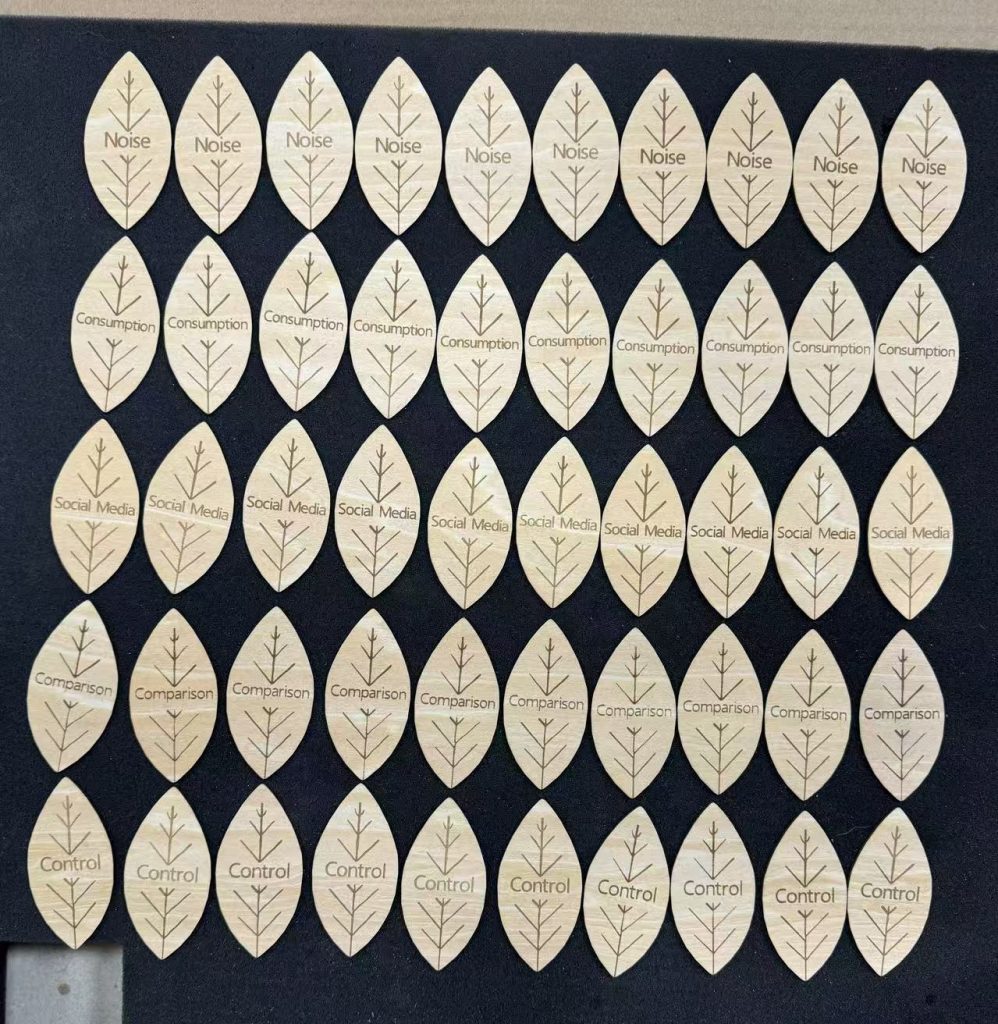
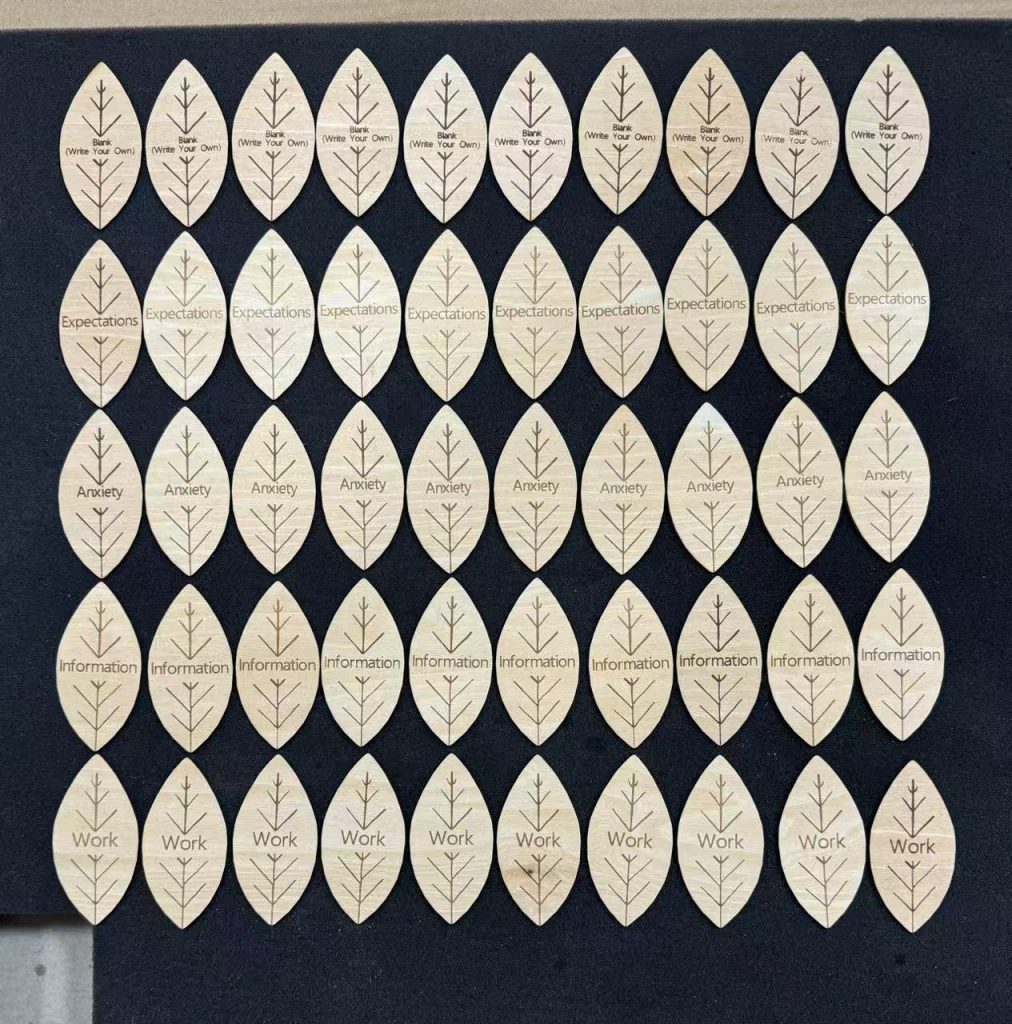
Wooden leaves contain words:
1
Comparison
2
Anxiety
3
Information
4
Work
5
Expectations
6
Social Media
7
Noise
8
Consumption
9
Control
10
Blank(Write Your Own)
These words are not considered problems to remove, but experiences participants may choose to notice.
Step 2 — Placing the Leaf into Water
Participants place their chosen leaf into water.
no discard
no destroy
putting something down temporarily.
This action represents a temporary pause rather than rejection or elimination.
Step 3 — Experiencing Water
Water was selected because of its qualities within Daoist philosophy. The concept of “Shang Shan Ruo Shui” describes water as flexible, accepting and non-resistant.
Through touching water, participants are invited to experience softness, acceptance and stillness through their body rather than only understanding it intellectually.
Step 4 — Silence and Pause
After placing the leaf into water, participants can stay with the experience for as long as they feel comfortable.
The three-minute sand timer is not a requirement, but a visual reminder that this moment does not need productivity or achievement.
Step 5 — Taking Away a Blank Leaf Bookmark
At the end of the experience, participants receive a blank wooden leaf bookmark.
Not only a gift, but also material reminder.
Unlike the first leaf, which carries a word representing what participants choose to put down, the bookmark is intentionally empty.
It represents the space created after letting go.
5. Material Development
The wooden leaves shown in this image are real prototypes that have already been produced. To ensure sufficient materials for the testing phase, each word category was produced with 10 identical pieces, allowing participants to freely select and interact with the leaves during the intervention.
Wooden Leaves
I chose wood because it connects with natural processes and transformation.
- Basswood
- Light colour
- Laser engraving
- Water darkening effect
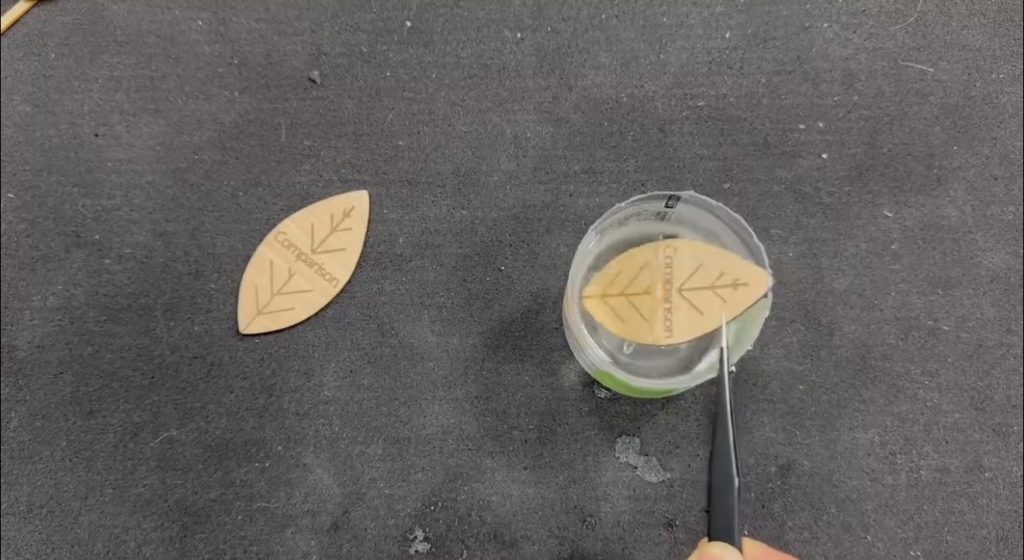
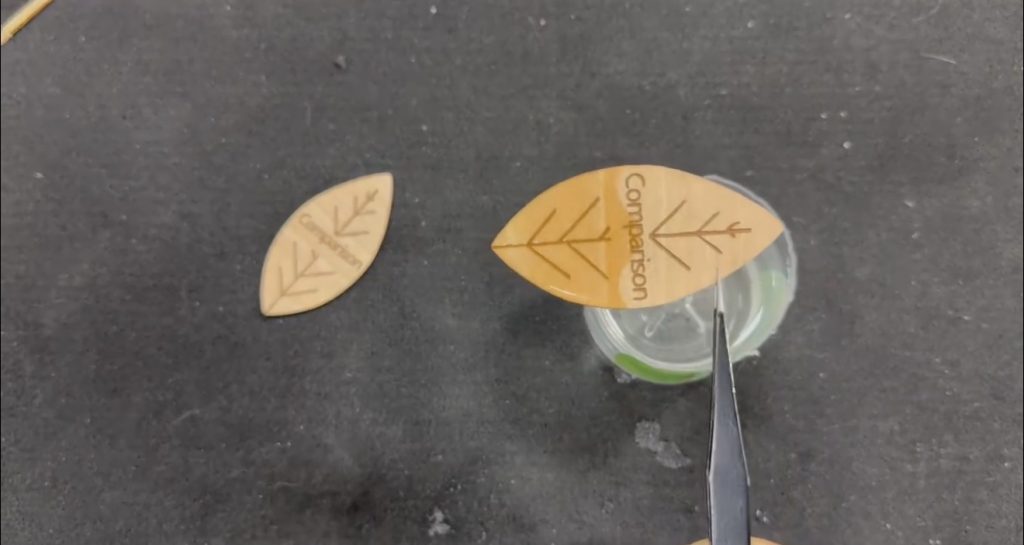
The experiment showed that 1.5mm basswood created the most noticeable colour change after water absorption, therefore it was selected for the final production. The visible transformation allows the material itself to participate in the reflective process.
Water as Interaction Medium
Water allows the internal reflection to become visible through physical change.
6. Preparation for Testing
Participants
Based on tutorial feedback, I will test the intervention with a more defined participant group to create comparable results.
Participants:
- 18–30 years old
- 10 or more than 10 participants
- Chinese and international participants
Feedback Collection
Feedback will combine open-ended questions and semi-structured conversations.
- How did you feel during the experience?
- What did the leaf represent for you?
- Did the experience change your understanding of “pause” or “space”?
Later follow-up:
I will also reconnect with participants after several days to understand whether the experience created further reflection over time.
7. Reflection
Through this intervention, I am not attempting to teach participants how to let go or change their lives. Instead, EMPTYING creates a temporary space where participants can notice what they carry and reconsider their relationship with everyday consumption.
Leave a Reply