Before You Decide — Designing First Encounters with Unfamiliar Health Practices Across Cultures
A Simple Question
There was a moment in my presentation when I asked a simple question: “Would you consider seven days without food?” Most people reacted immediately. Some felt surprised, while others felt uncomfortable. No one asked for more information first, and their reaction came before understanding. This moment made me realise how quickly people judge something unfamiliar.
Instant Judgement
When I first asked the question, most people responded very quickly and described it as unhealthy, extreme, or even dangerous. This shows how fast judgement happens, often before people have time to understand the context. Gladwell (2001) explains how people make rapid decisions based on limited information and first impressions. In this case, the idea of fasting was judged before its cultural meaning was explored. This highlights how unfamiliar practices are often rejected too early.
Culture and Health
This led me to question what “health” actually means. In many Western contexts, health is closely linked to science and medicine, while cultural practices are often seen as separate. Because of this, practices such as Daoist fasting or breathing techniques can feel unfamiliar or unsafe. However, this understanding is not universal. Smith (2012) reminds us that knowledge is shaped by cultural perspectives, and Sontag (2013) shows that ideas of health are influenced by language and social context. This suggests that different cultures may define health in different ways.
The Missing Pause
Judgement often happens very quickly, while reflection takes more time. Bolton (2018) describes reflective practice as the ability to pause and think before reacting, yet this pause is often missing in everyday situations. As a result, people tend to react based on instinct rather than understanding. This lack of reflection can lead to misunderstanding, especially when encountering unfamiliar cultural practices. Creating space for reflection becomes an important part of this project.
My Intervention
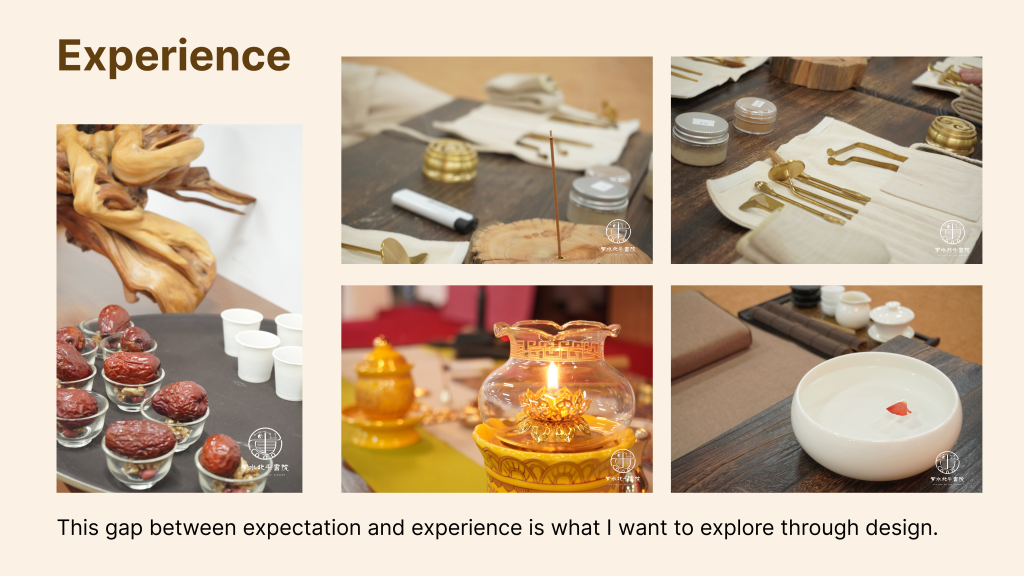
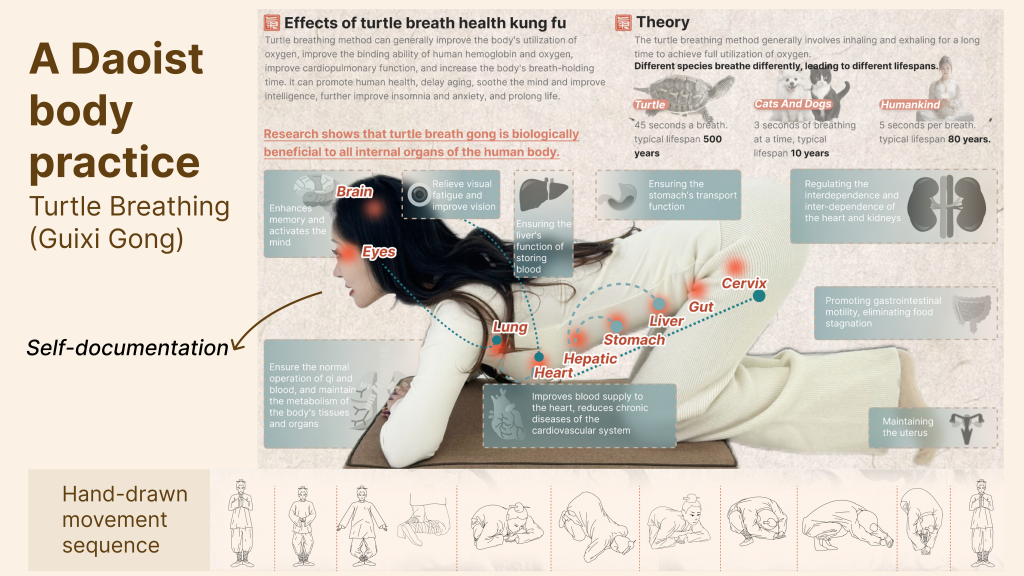
My project does not ask people to follow a specific practice, but instead focuses on redesigning the first encounter. Rather than explaining the practice directly, I create a guided experience that allows people to engage in a different way. This includes sensory elements such as scent, visual material, and body-based practices, along with personal narratives. During the presentation, I introduced a very light scent and showed a Daoist breathing practice called Guixi Gong. These elements are not instructions, but gentle entry points that invite curiosity.
This approach relates to Freire (2001), who suggests that learning happens through experience rather than instruction. By slowing down the moment of encounter, the design creates space for reflection instead of immediate judgement.
Context of Practice
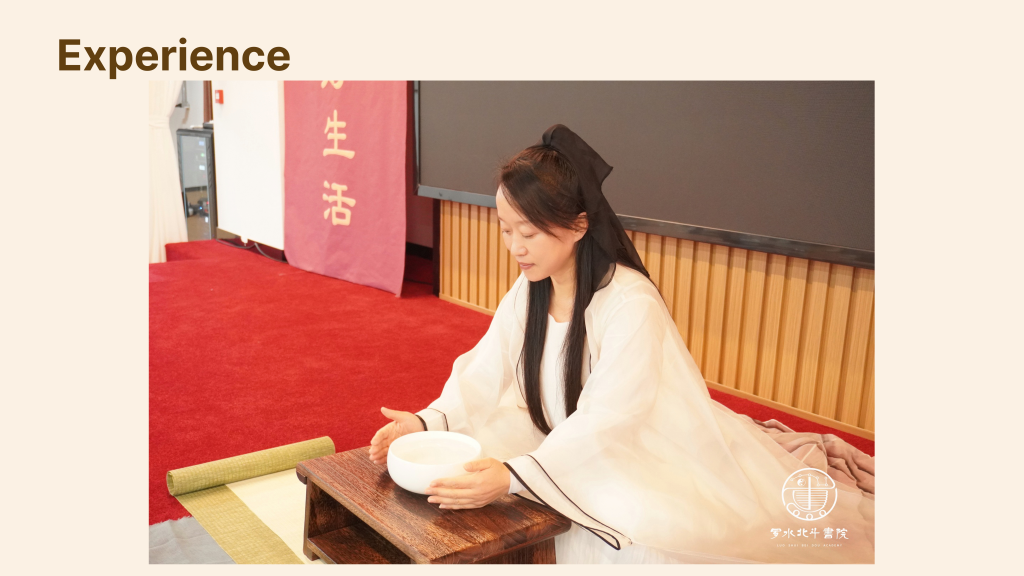
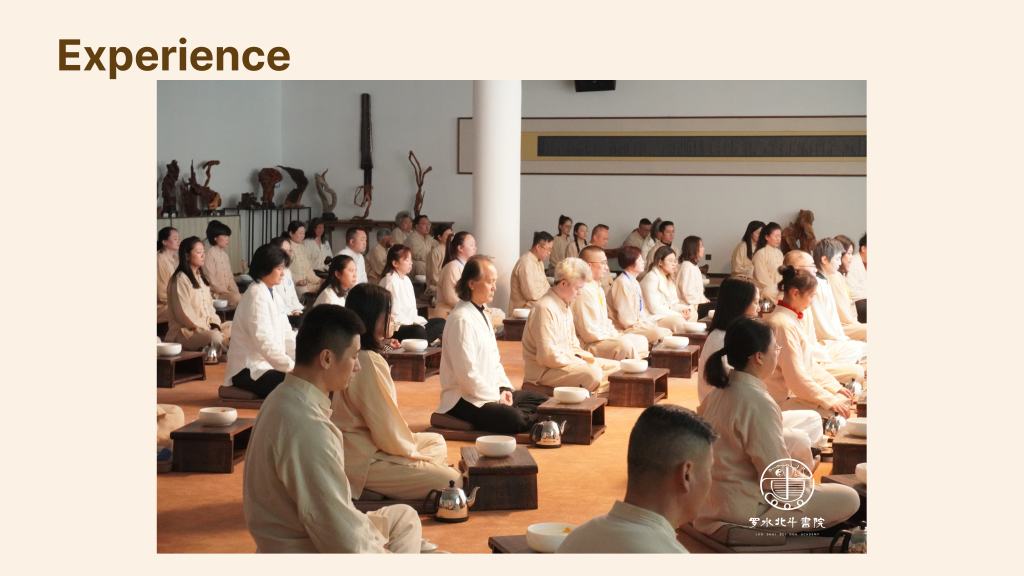
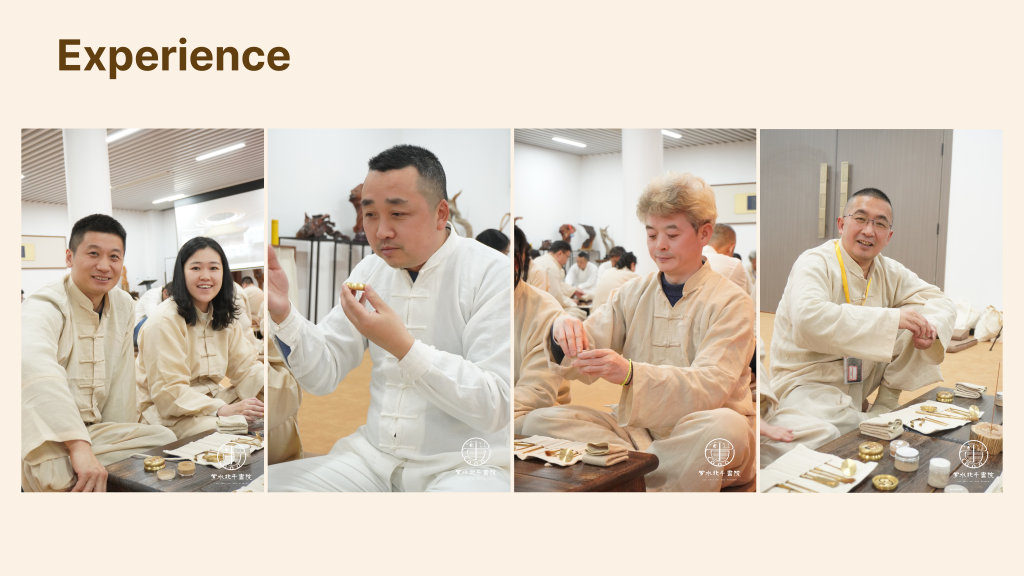
The Daoist fasting practice I explore is called Bigu. Through an academy I have personal access to, this practice has been developed across more than 300 sessions, involving nearly 30,000 participants. This provides a grounded context for my project, rather than a general claim about health. I use Bigu as a situated case to explore how unfamiliar practices are perceived, rather than to prove its effectiveness. The data referenced here comes from internal records of the academy. At the same time, I recognise that personal experience alone is not enough. It needs to be supported by reflection and critical understanding. This balance between experience and interpretation is central to my project.
What I Want to Change
The change I want to see is not about acceptance or agreement, but about creating a different starting point. Instead of rejecting something unfamiliar immediately, people are invited to pause and reflect. This project is not about replacing medical knowledge, but about questioning how we define health and how these definitions are shaped. It also reflects an action research approach, where understanding develops through practice and reflection (McNiff, 2013). In this sense, the goal is to create openness rather than certainty.
Reflection
Through this project, I realised that my initial presentation focused too much on sharing my interest and not enough on explaining my intention. The feedback helped me understand that clarity is important, especially when working with unfamiliar or sensitive topics. I also learned that using an extreme example, such as fasting, without enough framing can create distance, as people may react before engaging with it.
This made me rethink my approach. Instead of focusing only on fasting as a starting point, I began to consider how different elements could support the way people enter the topic. I introduced softer entry points such as scent and breathing. These elements are easier to accept and help create space for curiosity.
A key insight from the feedback was the distinction between cultural and medical understandings of health. I realised that many people approach health mainly through a medical lens, where practices are expected to be scientifically proven. In contrast, practices like Bigu come from a cultural and philosophical context, where health is understood differently.
This tension between the two perspectives became central to my project. It showed me that the issue is not only about unfamiliar practices, but about how different systems of knowledge are interpreted and judged.
This shifted my direction. Rather than explaining or justifying the practice, I began to explore how design can create a space between these perspectives, allowing people to pause before forming a judgement.
This process has changed how I think about design. It is not only about presenting ideas, but about shaping how people first encounter and interpret them. It has also made me more aware of the assumptions people bring when encountering unfamiliar ideas.
Bibliography
Bolton, G. (2018) Reflective Practice: Writing and Professional Development. London: Sage.
Freire, P. (2001) Pedagogy of Freedom: Ethics, Democracy and Civic Courage. Lanham: Rowman and Littlefield.
Gladwell, M. (2001) The Tipping Point: How Little Things Can Make a Big Difference. London: Abacus.
McNiff, J. (2013) Action Research: Principles and Practice. London: Routledge.
Reddy, B. L. (2024) ‘Health benefits of intermittent fasting: A review’, Journal of Health and Metabolism, 12(2), pp. 45–60.
Smith, L. T. (2012) Decolonizing Methodologies. London: Zed Books.
Sontag, S. (2013) Illness as Metaphor. New York: Farrar, Straus and Giroux.
Trabelsi, K., Chtourou, H., Stannard, S. R., Chamari, K. and Shephard, R. J. (2022) ‘Religious fasting and its impacts on health: A systematic review’, Frontiers in Nutrition, 9, pp. 1–15.
Visioli, F. (2022) ‘Traditional and medical applications of fasting’, Nutrients, 14(6), pp. 1–12.
Fasting: From cultural practices to health implications (2024) ResearchGate. Available at: https://www.researchgate.net/
(Accessed: 15 April 2026).
Leave a Reply