Before Explanation Begins
A Guided First Encounter with Chinese Traditional Wellbeing Practices
WHAT
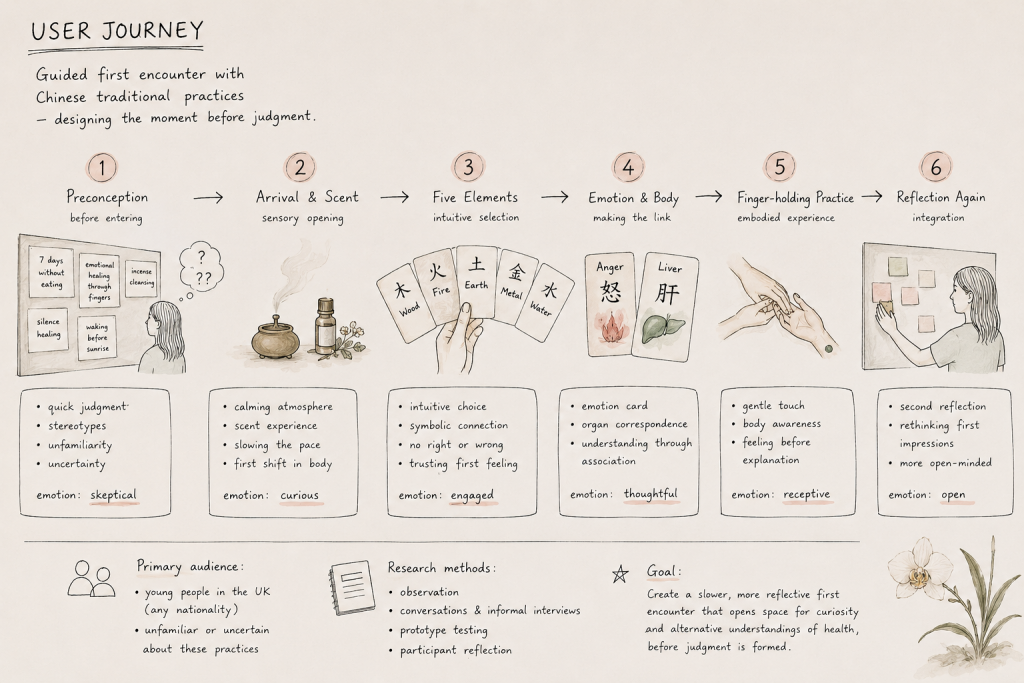
This project explores how people form immediate judgements when encountering unfamiliar wellbeing practices.
Using Chinese traditional wellbeing practices as a cultural context, the project investigates how atmosphere, bodily sensation, and first impressions influence perception before explanation begins (Pink, 2015; Böhme, 2017).
Rather than trying to convince people to “believe” in specific practices, the project explores whether sensory interaction and embodied participation may create space for curiosity and reflection.
Research Question
How can a guided first encounter be designed to disrupt immediate judgement and open up alternative understandings of health?
Key Terms include: guided first encounter, immediate judgement, embodied experience, cultural wellbeing, sensory interaction, and reflective engagement.
WHY
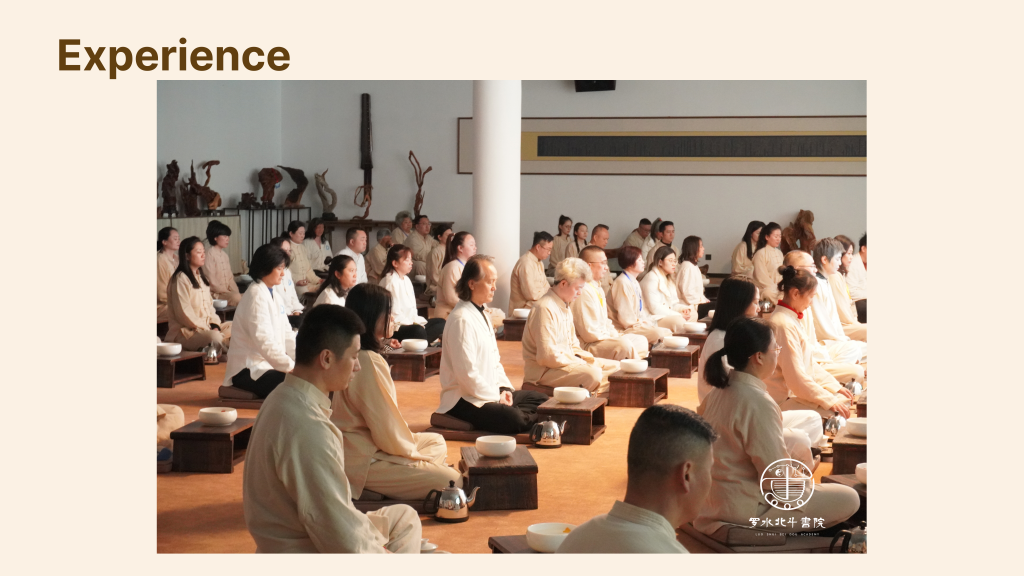
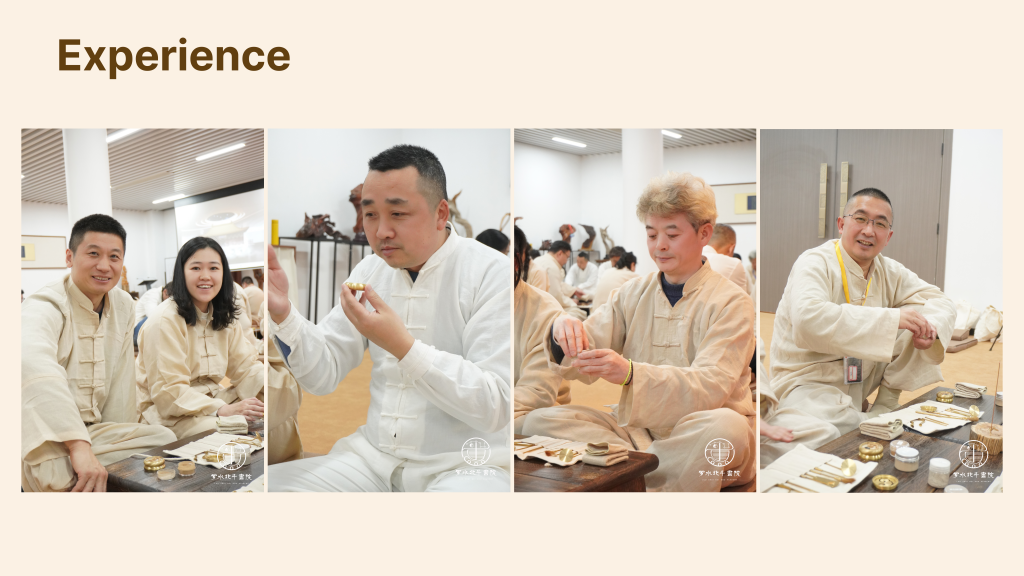
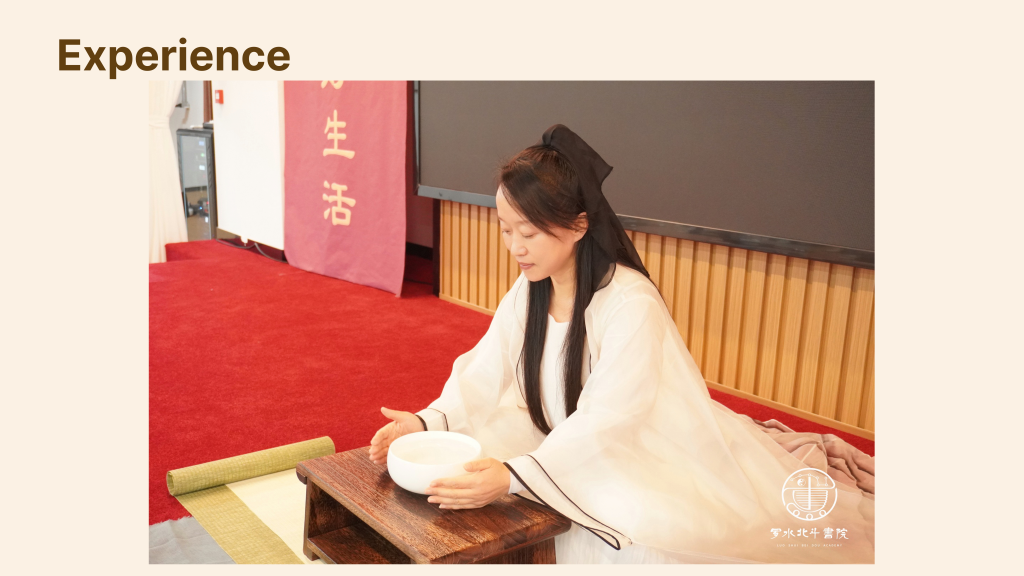
I grew up within a Chinese cultural academy where tea culture, incense culture, meditation, and traditional wellbeing practices like Bigu were part of everyday life.
These experiences made me realise that many wellbeing practices are often understood physically and emotionally before they are explained intellectually.
However, when introduced in different cultural contexts, unfamiliar practices are often questioned before people experience them directly.
This project became interested in that moment before judgement takes place.
The project is less interested in proving whether these practices are scientifically correct, and more interested in exploring slower and more reflective encounters with unfamiliar perspectives on wellbeing (hooks, 2010).
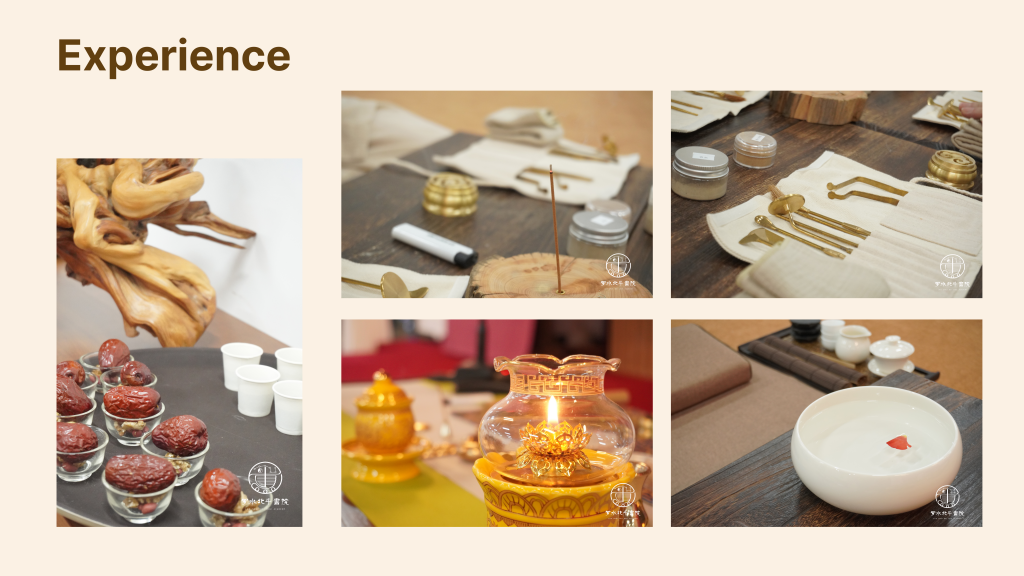
HOW
The project developed through qualitative and practice based research methods including observation, conversation, sensory interaction, prototype testing, and participant reflection (McNiff, 2013; Bolton, 2018).
The primary audience includes young adults in the UK from different cultural backgrounds who may feel curious yet uncertain when encountering unfamiliar wellbeing practices.
The intervention was also informed through ongoing conversations with cultural practitioners, healing spaces, and medical perspectives.
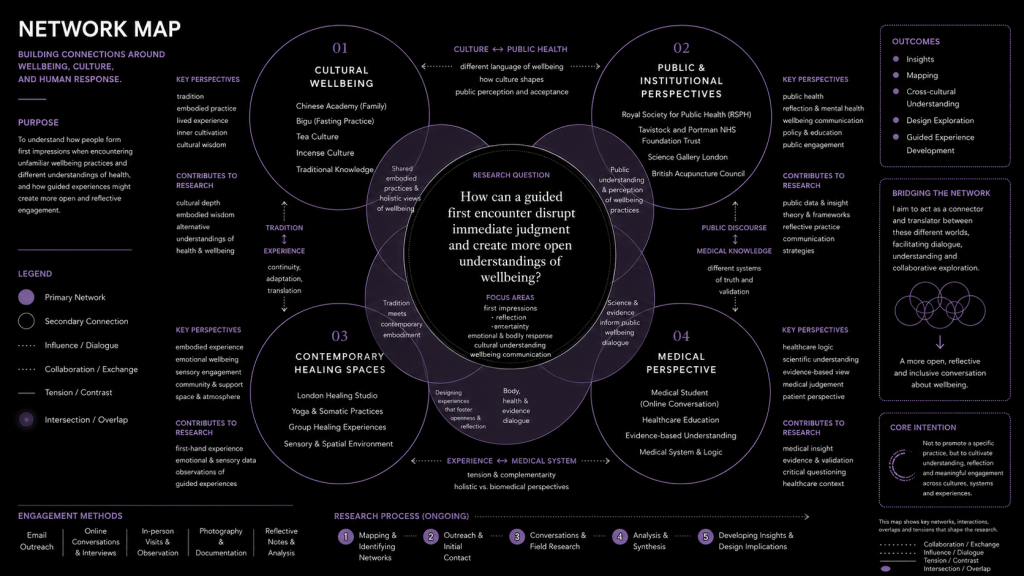
Research networking included:
- conversations with a Chinese cultural academy
- visits to healing spaces in London
- outreach to wellbeing organisations
- interviews with medical perspectives
These interactions helped shape the project’s understanding of curiosity, scepticism, atmosphere, and embodied wellbeing.
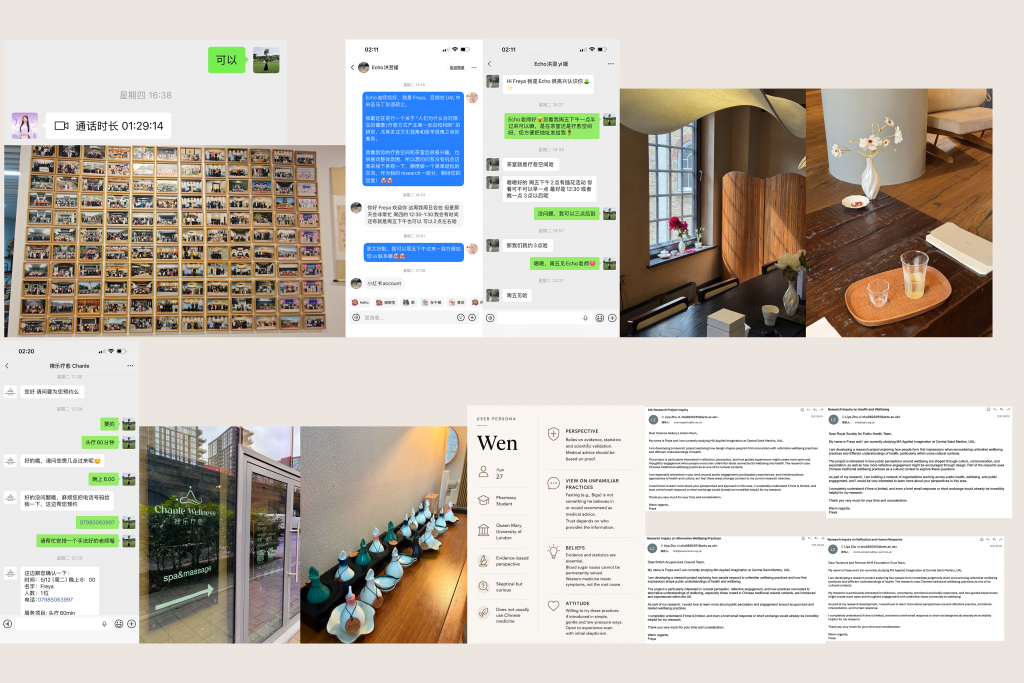
Some evidence is shown below. The detailed networking process and research development will be explored further in the Project 6 blog.
INTERVENTION DEVELOPMENT
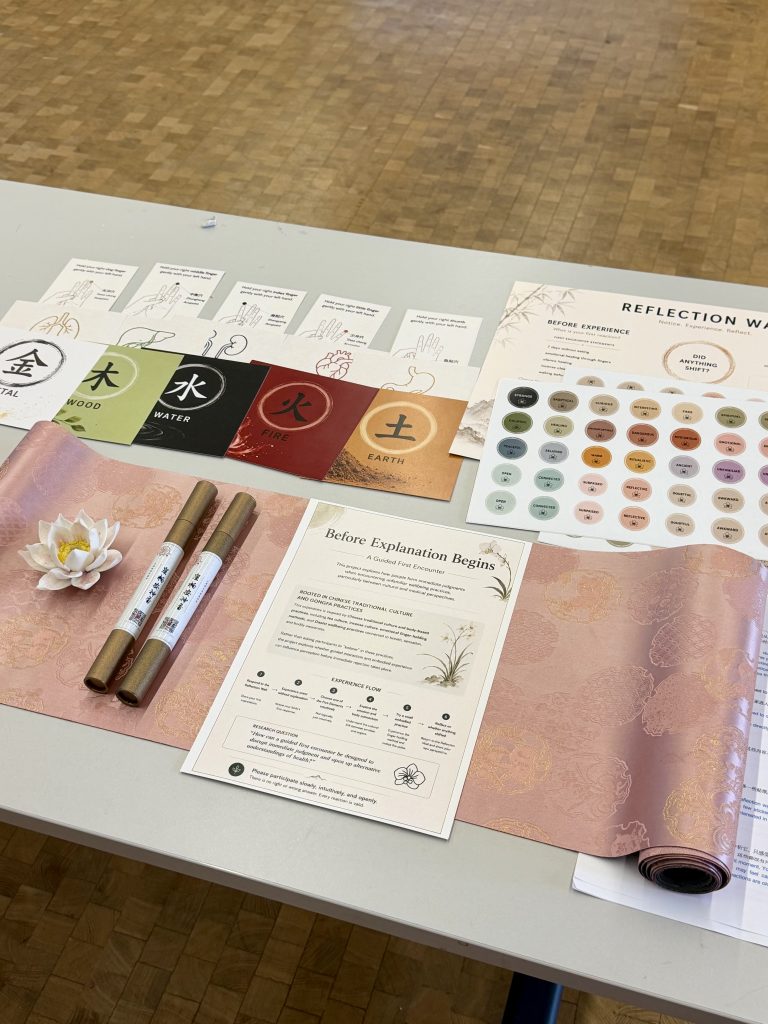
The intervention was developed as a guided experiential showcase involving:
- reflection prompts
- scent interaction
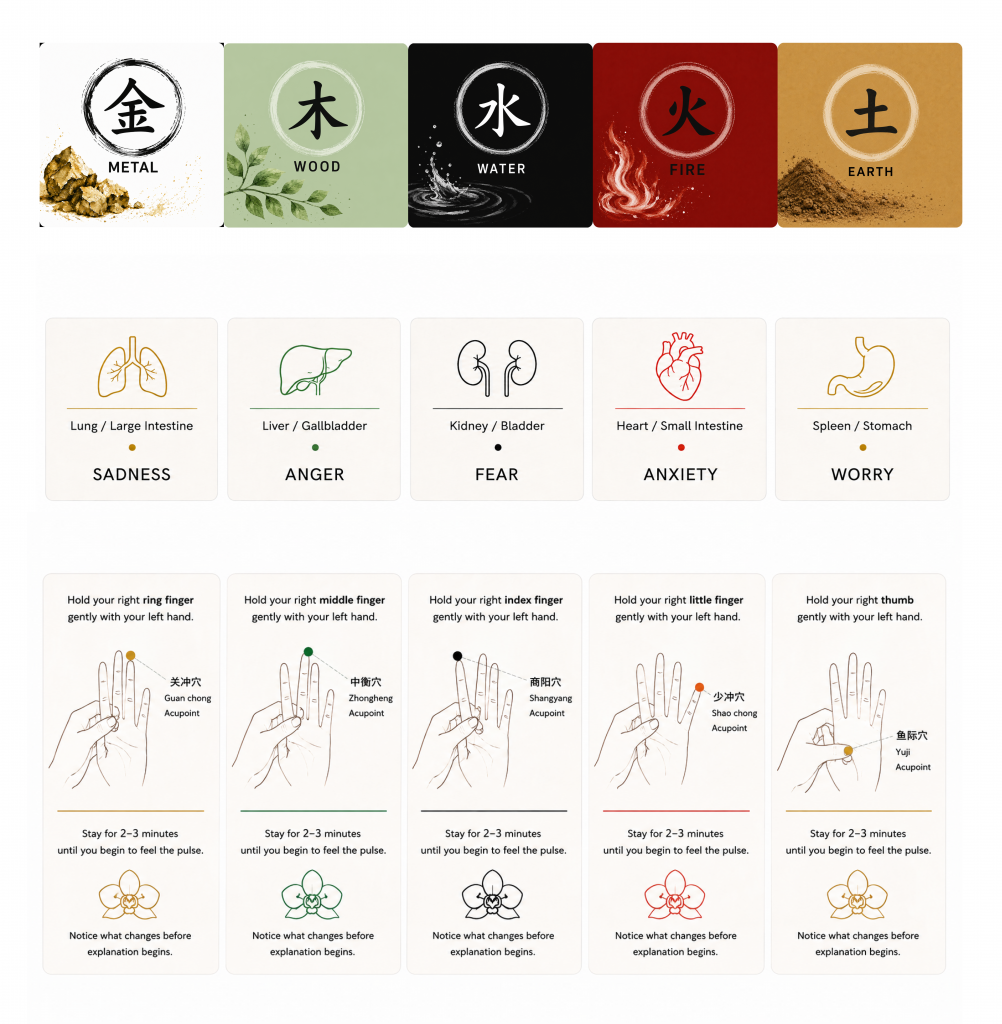
- Five Elements emotional associations
- embodied finger holding practices
- participant reflection
Rather than immediately explaining the practices, participants were invited to move slowly through atmosphere, intuition, bodily awareness, and reflection.
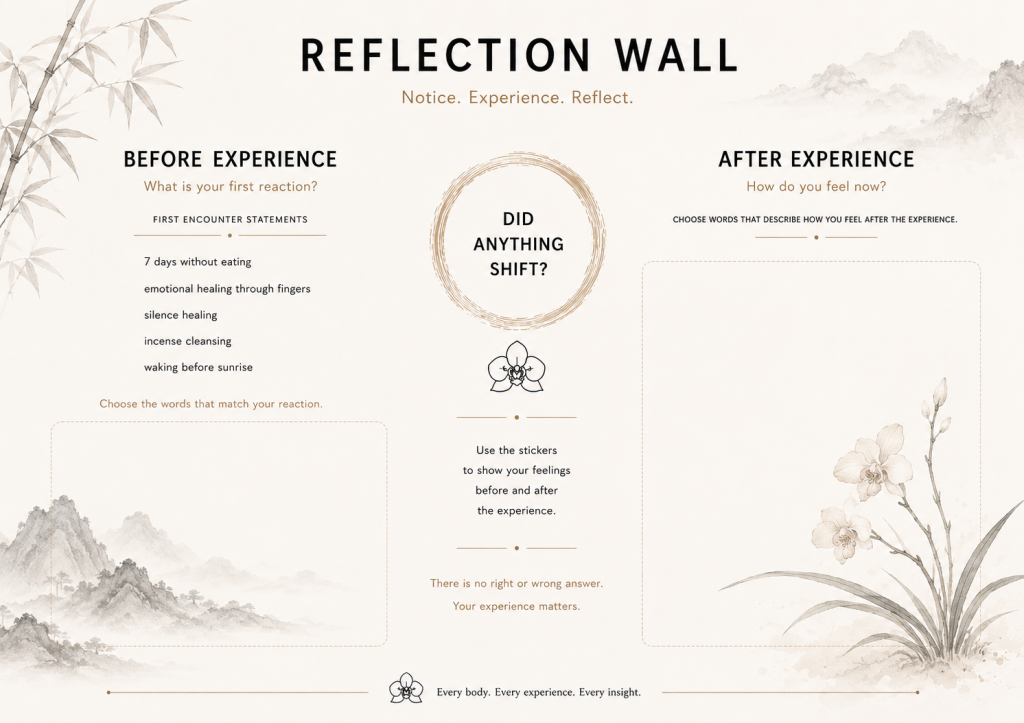
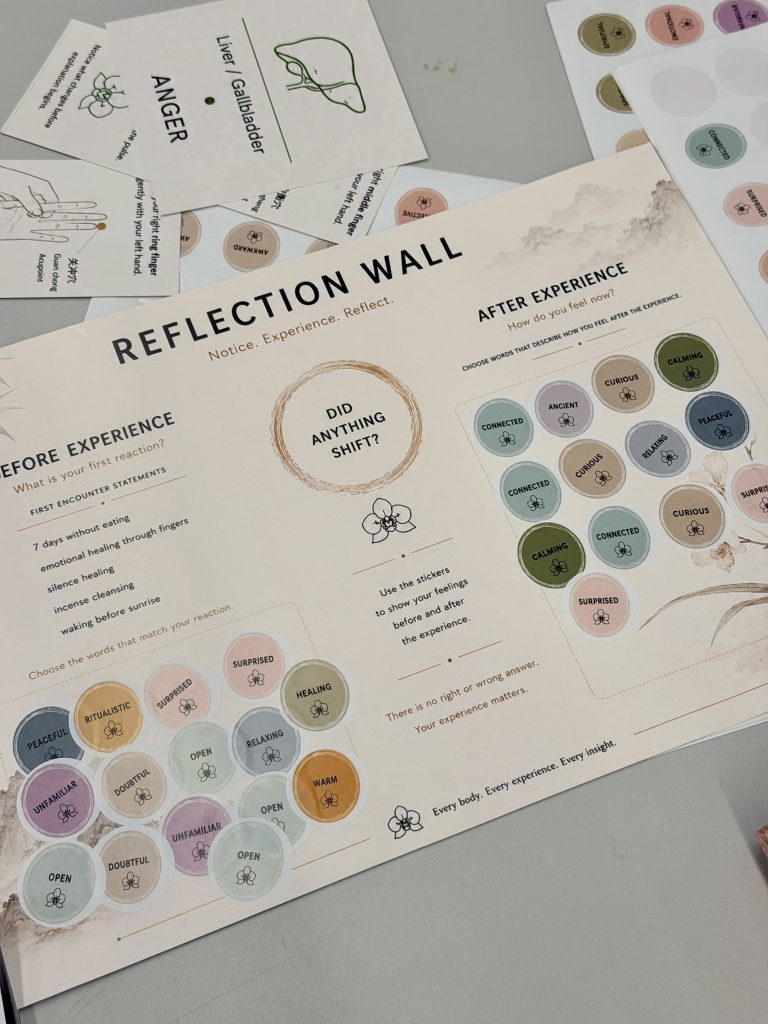
This is the reflection wall I designed and printed.
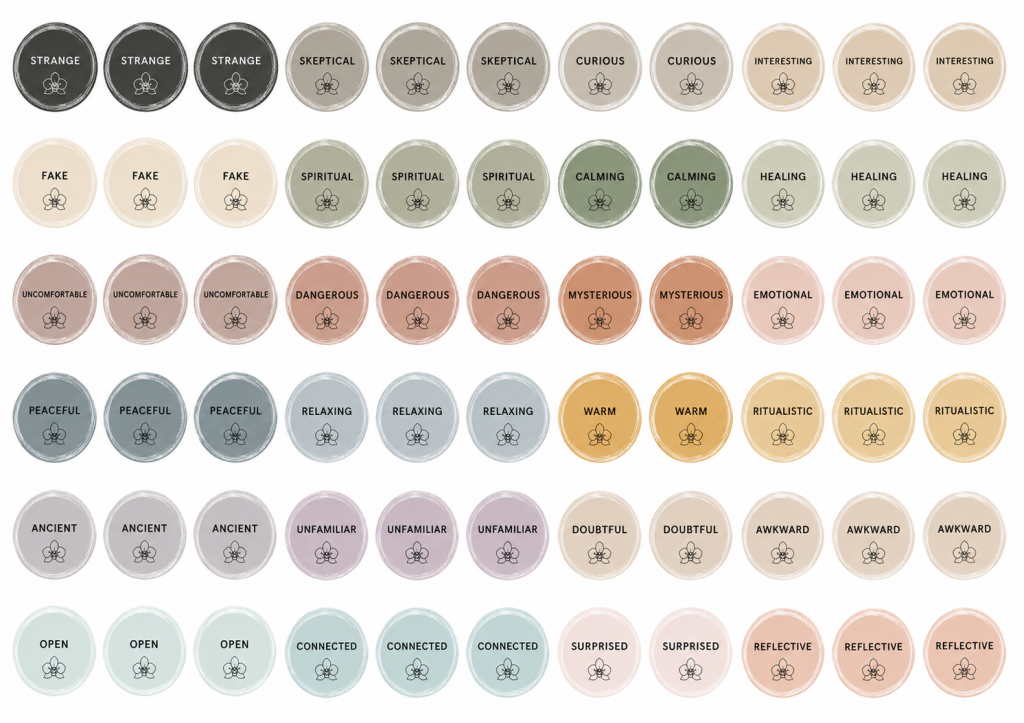
These are the emotional stickers I designed and printed.
These are the Five Elements cards I designed and printed.
SHOWCASE EXPERIENCE
Participants were first invited to respond to provocative wellbeing statements before entering a slower sensory experience.
The showcase encouraged participants to reflect on whether their perceptions shifted after embodied interaction and sensory engagement.
Tested during the showcase on 18 May.
WHAT-IF
If successful, the project may contribute people’s involvement in unfamiliar health and wellbeing practices in a more reflective and culturally sensitive way.
Rather than promoting specific health methods, the research explores how design might reshape the conditions in which first impressions and judgements are formed.
The project is also aware of the possible limitations. Some participants may still reject unfamiliar practices, while others may misunderstand that the project is promoting a particular cultural or health concept. Therefore, maintaining a balanced and reflective position throughout the research process remains important (Smith, 2012).
REFLECTION
This project shifted my understanding of wellbeing away from fixed answers and towards atmosphere, perception, and embodied experience.
Rather than attempting to prove unfamiliar practices right or wrong, the project became more interested in how design might create slower and more reflective first encounters between different understandings of health.
REFERENCES
Bolton, G. (2018) Reflective Practice: Writing and Professional Development. London: Sage.
Böhme, G. (2017) The Aesthetics of Atmospheres. London: Routledge.
Brown, A.M. (2021) Holding Change: The Way of Emergent Strategy Facilitation and Mediation. Chico, California: AK Press.
Deardorff, D.K. (2006) ‘Identification and assessment of intercultural competence as a student outcome of internationalization’, Journal of Studies in International Education, 10(3), pp. 241–266.
Freire, P. (2001) Pedagogy of Freedom: Ethics, Democracy and Civic Courage. Lanham: Rowman and Littlefield.
hooks, b. (2010) Teaching Critical Thinking. London: Routledge.
McNiff, J. (2013) Action Research: Principles and Practice. London: Routledge.
Pink, S. (2015) Doing Sensory Ethnography. 2nd edn. London: Sage.
Smith, L.T. (2012) Decolonizing Methodologies. 2nd edn. London: Zed Books.
Leave a Reply