Developing the First Full Intervention
5 August 2026
Over the past few days, my focus has shifted from developing the concept to preparing the complete intervention for its first round of user testing on 7 August 2026. At this stage, the intervention has become a tangible experience rather than a series of individual prototypes. My priority has been to refine every touchpoint that participants will encounter, from the introduction of the project to the final reflection.
Research Question Development
Following my recent tutorial, I decided to temporarily revise my research question to a more open form:
How can an embodied experience of emptiness create space for reflection and wellbeing in contemporary society?
Rather than directly mentioning Bigu or Chinese philosophy, I intentionally leave the source of the experience open at this stage. The purpose of the upcoming user testing is not to confirm a predetermined answer, but to explore what participants actually respond to.
After analysing the testing results, the answer may naturally emerge. It may reveal that the embodied experience is most strongly connected to Bigu, Chinese traditional philosophy, Daoist philosophy, or perhaps another cultural perspective that has not yet been fully recognised. Therefore, I see this research question as a temporary framework that allows the testing itself to guide the next stage of the project.
Preparing the Participant Journey
To ensure participants can understand the project while still entering the experience with an open mind, I designed a complete set of materials for the intervention.
Project Introduction Card
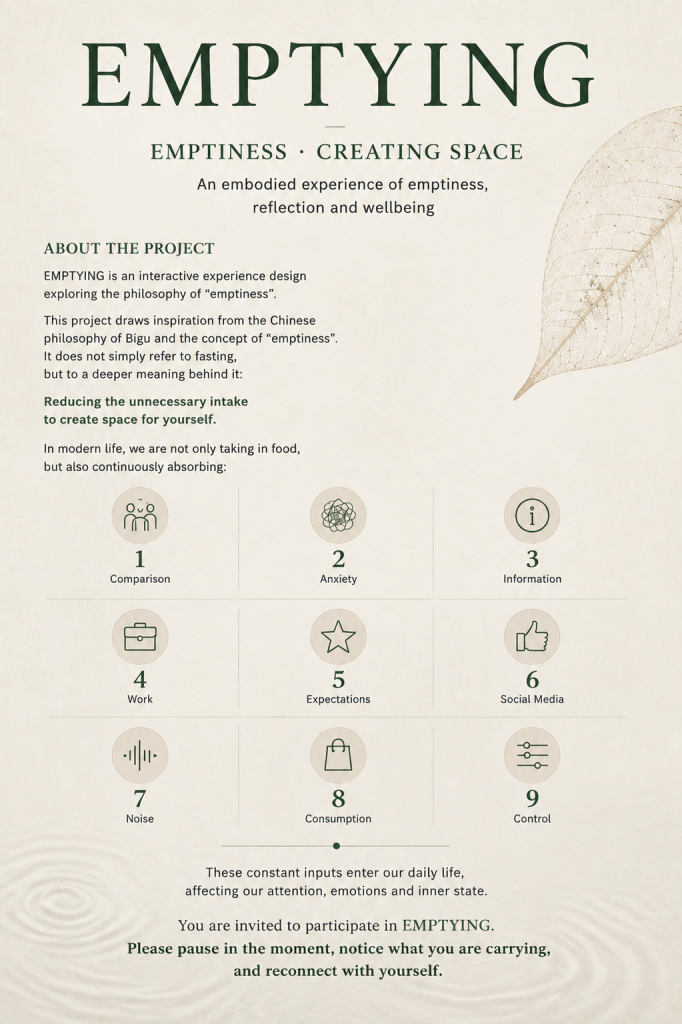
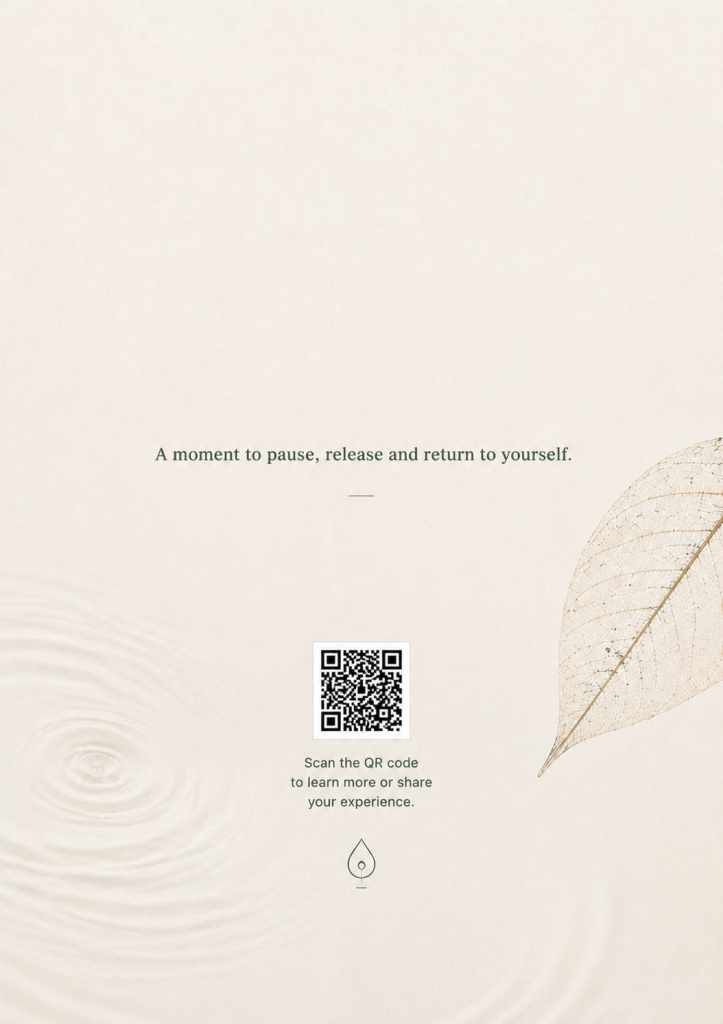
The project introduction card was produced in both Chinese and English versions. Rather than functioning as an instruction sheet, it briefly introduces the concept of EMPTYING, explains the reinterpretation of Bigu, and invites participants into the experience without revealing or influencing the expected outcome.
Figure 1. Project Introduction Card (Chinese Version)
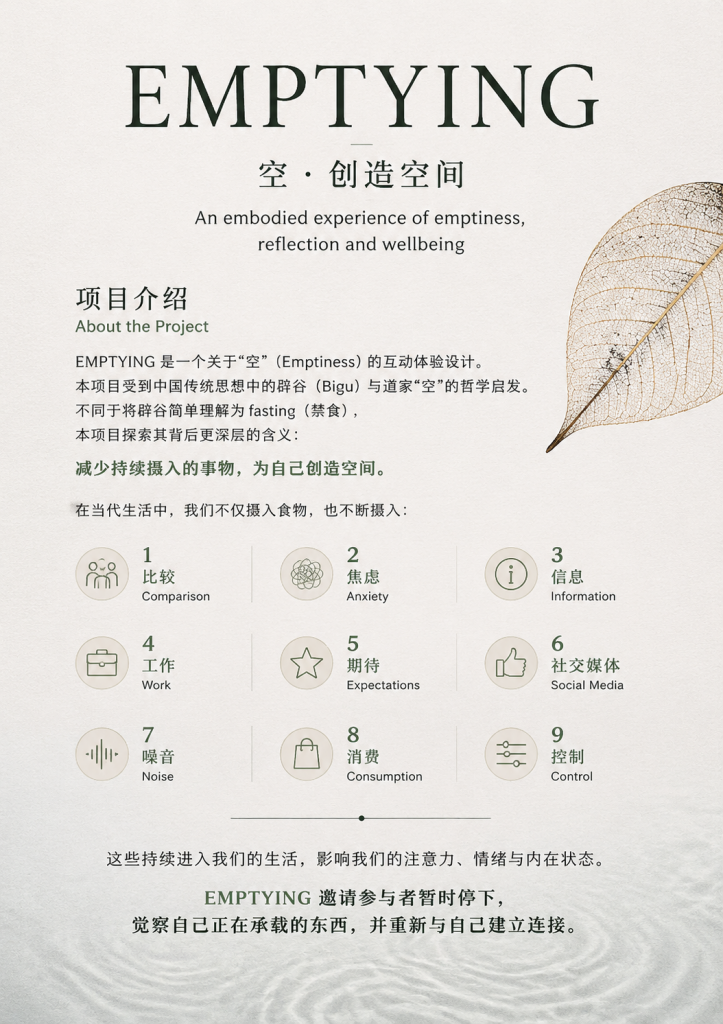
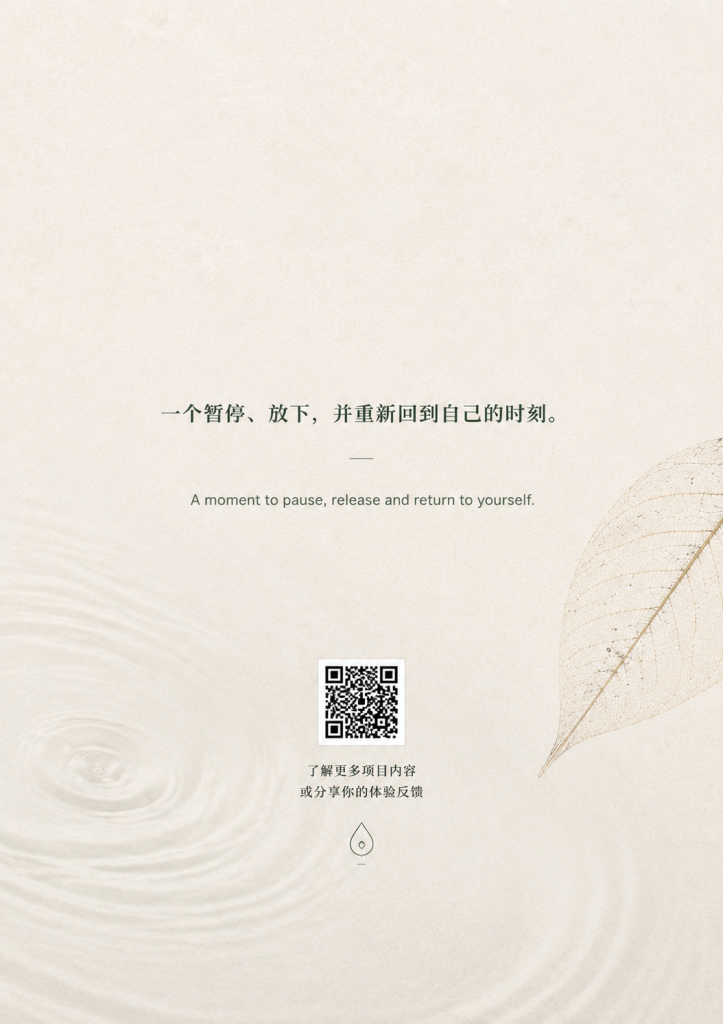
Figure 2. Project Introduction Card (English Version)
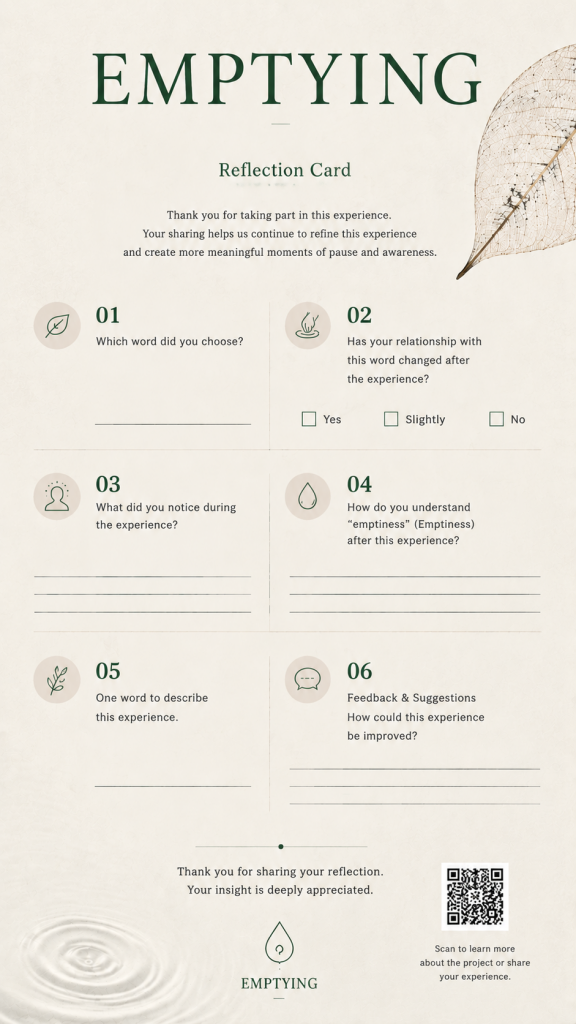
Reflection Card (Feedback Card)
Instead of using a traditional questionnaire, I designed a reflection card that becomes part of the intervention itself. Participants complete the card only after everyone has finished the experience, allowing them time to process their feelings before responding.
The questions focus on reflection rather than evaluation, encouraging participants to describe their own experience, understanding of emptiness, and suggestions for improving the intervention.
Figure 3. Reflection Card (Chinese Version)
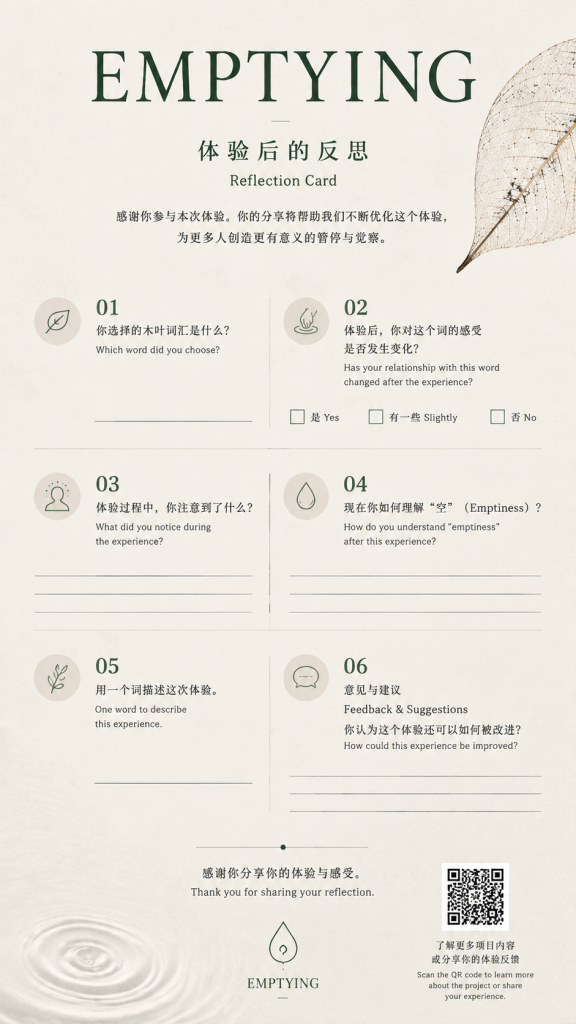
Figure 4. Reflection Card (English Version)
Participant Information & Consent
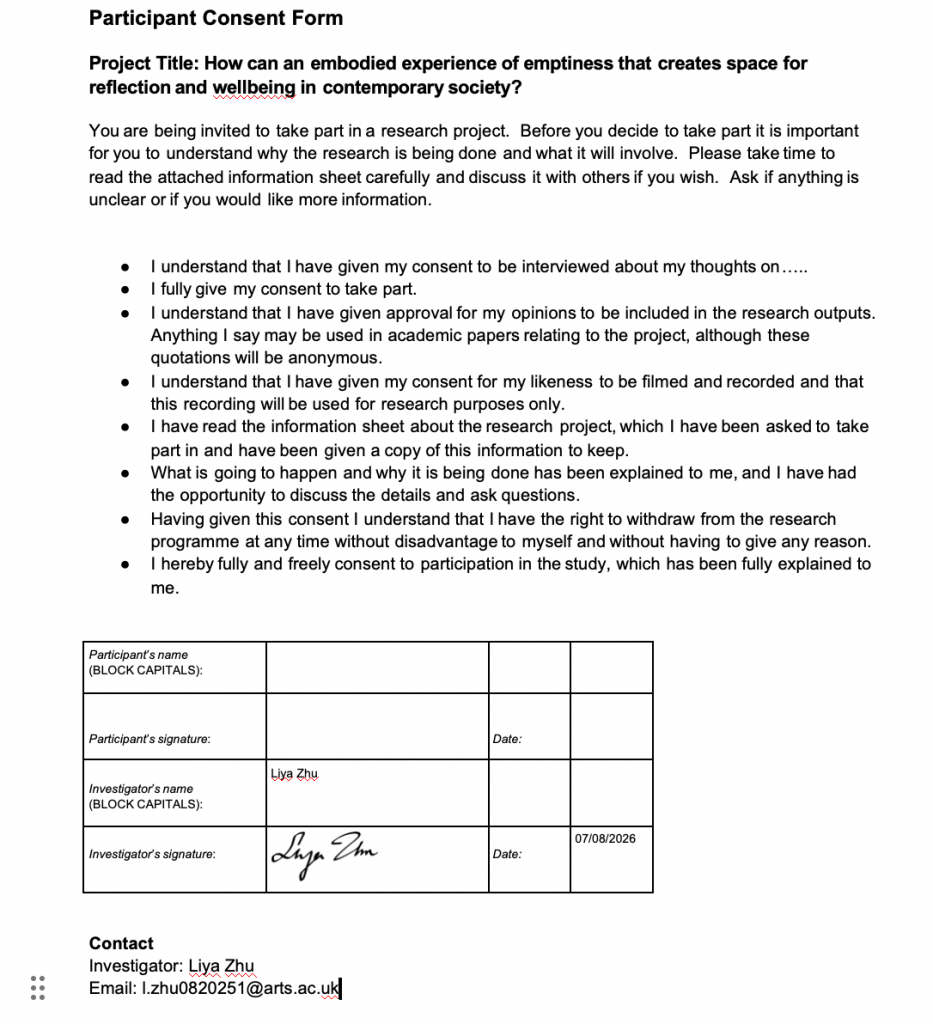
Following ethical research requirements, I also prepared a Participant Information Sheet and Participant Consent Form.
Before the intervention begins, participants are invited to read the project information and sign the consent form, ensuring they understand the purpose of the research, how their feedback will be used, and that participation is entirely voluntary.
Figure 5. Participant Consent Form
Completing the Prototype
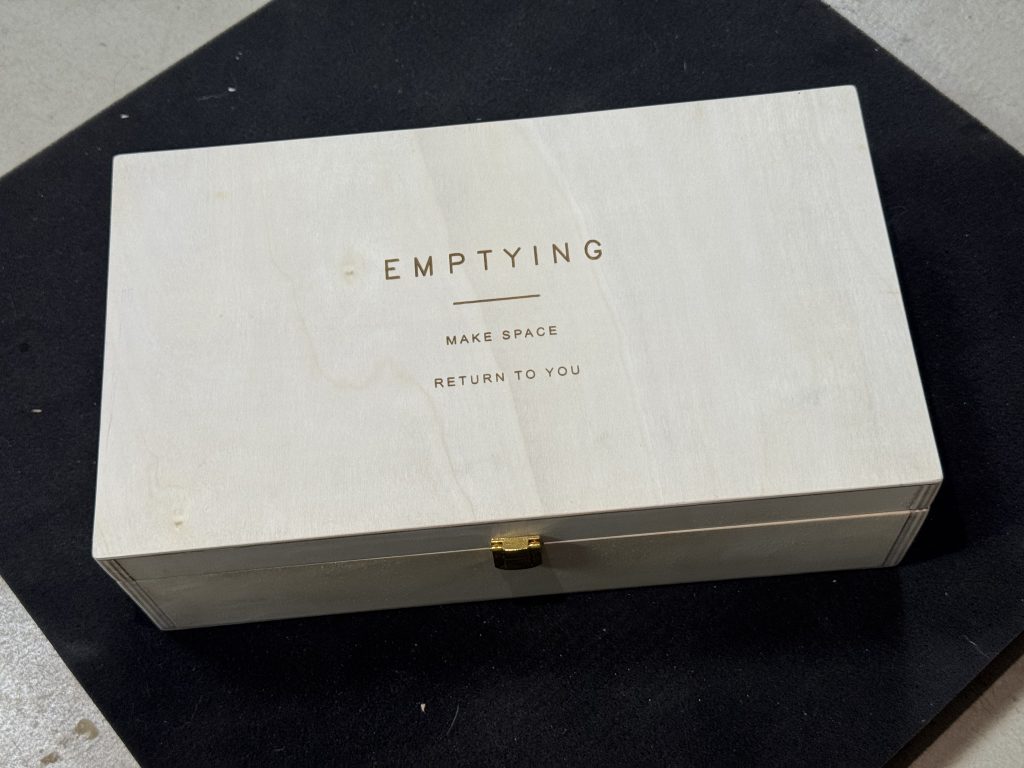
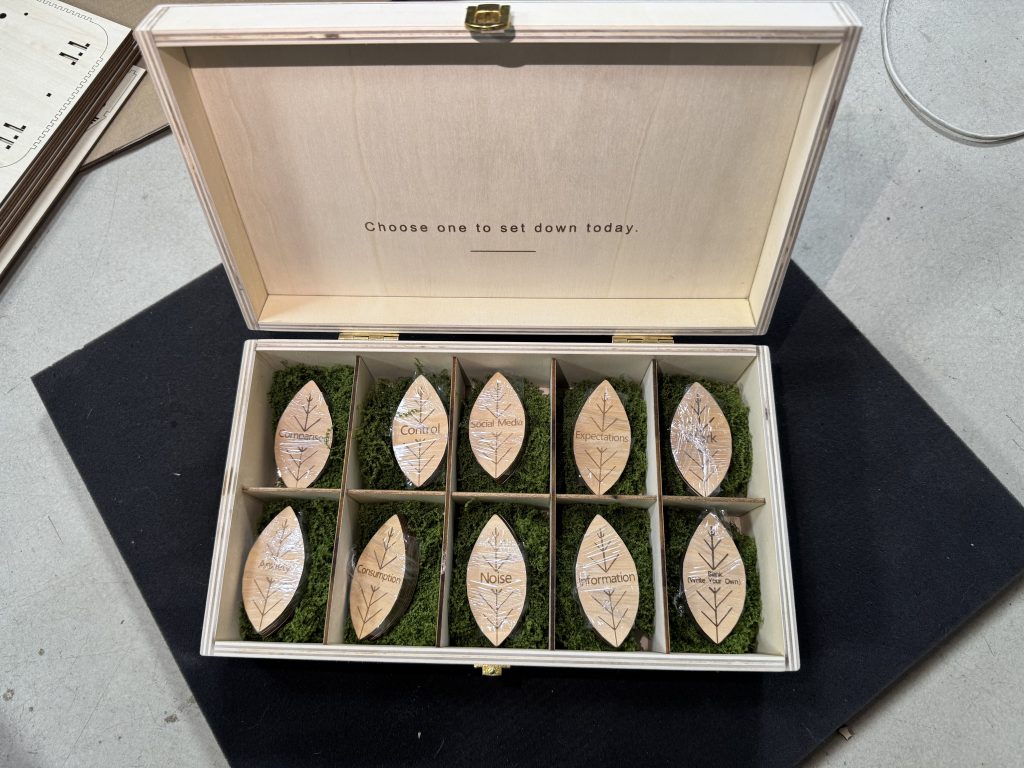
The physical prototype has now been completed and is ready for testing.
This includes the wooden leaves, the interaction materials, the installation for participants to either keep or temporarily leave their wooden leaf after the experience, and the overall participant journey. Seeing the project develop from sketches into a complete embodied experience has been an important milestone in the design process.
Figure 6. Final Intervention Prototype
Looking Ahead
Everything is now ready for the first round of intervention testing on 7 August.
Rather than evaluating whether the intervention is successful or unsuccessful, I see this testing session as an opportunity to observe how participants interpret the experience, how they understand the idea of emptiness, and how the intervention may evolve through their responses.
I am particularly interested in discovering whether the experience itself will reveal a clearer cultural grounding for the project. Instead of assuming the answer is Bigu, I hope the testing will indicate whether the intervention is ultimately understood through Bigu, Daoist philosophy, Chinese traditional philosophy, or perhaps another perspective that emerges from participants’ experiences.
I look forward to learning from this first testing session and allowing the participants’ voices to shape the next iteration of the project.
Leave a Reply